
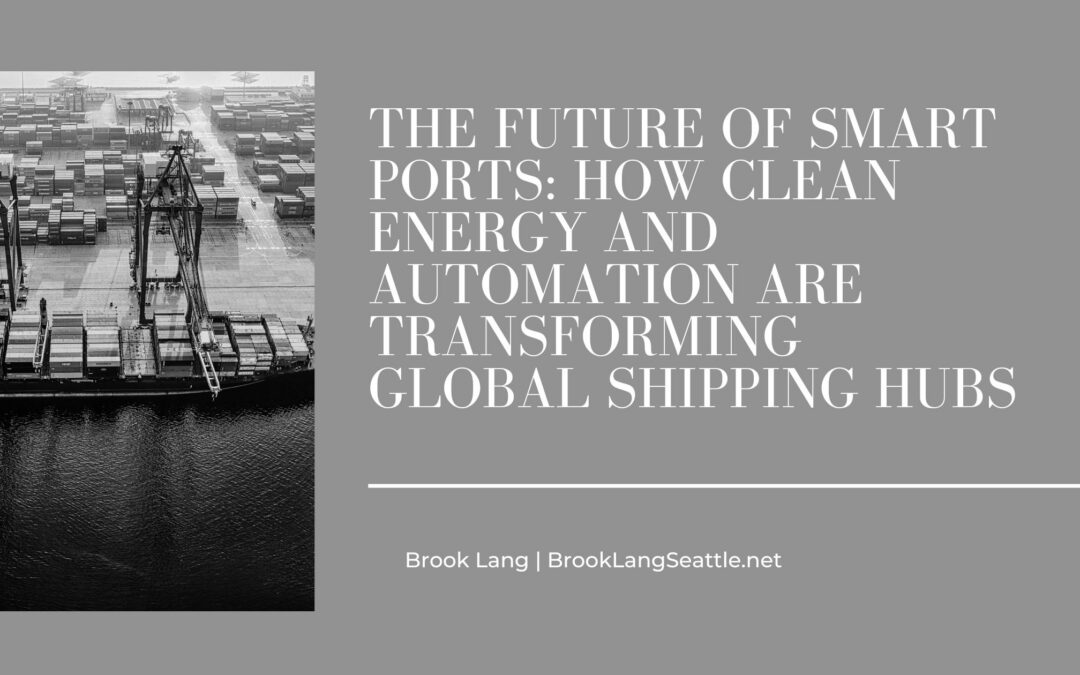
More than 80% of global trade by volume is transported by sea, making ports essential to the movement of goods and the health of the global economy. However, traditional port operations consume significant amounts of energy and contribute to greenhouse gas emissions through ships, cargo-handling equipment, trucks, and port infrastructure. As international trade continues to grow, ports are embracing clean energy, digital technologies, and automation to become smarter, more efficient, and more sustainable. These “smart ports” are redefining how goods move around the world while supporting ambitious climate goals.
What Makes a Port Smart?
A smart port uses advanced technologies such as artificial intelligence (AI), Internet of Things (IoT) sensors, automation, robotics, and real-time data analytics to optimize daily operations. Instead of relying solely on manual processes, smart ports continuously collect and analyze information about vessel traffic, cargo movement, equipment performance, and energy consumption.
This data-driven approach enables port operators to reduce delays, improve efficiency, lower operating costs, and enhance safety while minimizing environmental impacts.
Clean Energy Is Powering Port Operations
One of the biggest changes taking place at modern ports is the transition to cleaner energy sources. Many ports are replacing diesel-powered cranes, forklifts, and cargo-handling equipment with electric alternatives that produce fewer emissions and require less maintenance.
Shore power systems, also known as cold ironing, allow ships to connect to the local electrical grid while docked instead of running onboard diesel engines. This significantly reduces air pollution, greenhouse gas emissions, and noise in surrounding communities.
Many ports are also installing rooftop solar panels, offshore wind connections, battery energy storage systems, and microgrids to generate and manage renewable electricity on-site, further reducing their dependence on fossil fuels.
Automation Improves Efficiency
Automation is transforming nearly every aspect of port operations. Autonomous cranes, automated guided vehicles (AGVs), and robotic container handling systems move cargo with remarkable precision and consistency.
Artificial intelligence helps optimize ship scheduling, cargo routing, and equipment utilization by analyzing real-time conditions throughout the port. Digital twins—virtual models of physical infrastructure—allow operators to simulate traffic patterns, identify bottlenecks, and test operational improvements before implementing them.
These technologies increase productivity while reducing fuel consumption, equipment downtime, and unnecessary vessel waiting times.
Smarter Logistics and Supply Chains
Smart ports extend beyond the port itself by improving connectivity across the broader supply chain. IoT sensors and digital tracking systems provide real-time visibility into cargo shipments from arrival to final destination.
Shipping companies, trucking firms, rail operators, and logistics providers can coordinate more effectively using shared digital platforms, reducing congestion and minimizing delays. Better coordination also lowers fuel consumption by reducing idle time for ships and freight vehicles.
Challenges to Implementation
Despite their benefits, smart ports require substantial investment in digital infrastructure, clean energy systems, and workforce training. Cybersecurity is another critical consideration, as increasingly connected operations must be protected from digital threats.
Collaboration among governments, port authorities, technology providers, and private industry will be essential to ensure these systems remain secure, interoperable, and economically viable.
Building the Ports of Tomorrow
Smart ports represent the future of global maritime trade. By combining renewable energy, electrification, automation, and intelligent data systems, they are creating cleaner, safer, and more efficient shipping hubs capable of supporting growing global commerce.
As international supply chains continue to evolve, smart ports will play an increasingly important role in reducing emissions, improving operational resilience, and advancing sustainable economic growth. They demonstrate that innovation and environmental responsibility can work together to shape a more efficient and sustainable future for global trade.